Giovanni Claudio

Work

A look at the roles, systems, and projects that have shaped my work.

Sr. Principal Software Engineer, AI-Video Technical Lead

Medtronic, Digital Surgery

Jan 2025 - Present London, UK

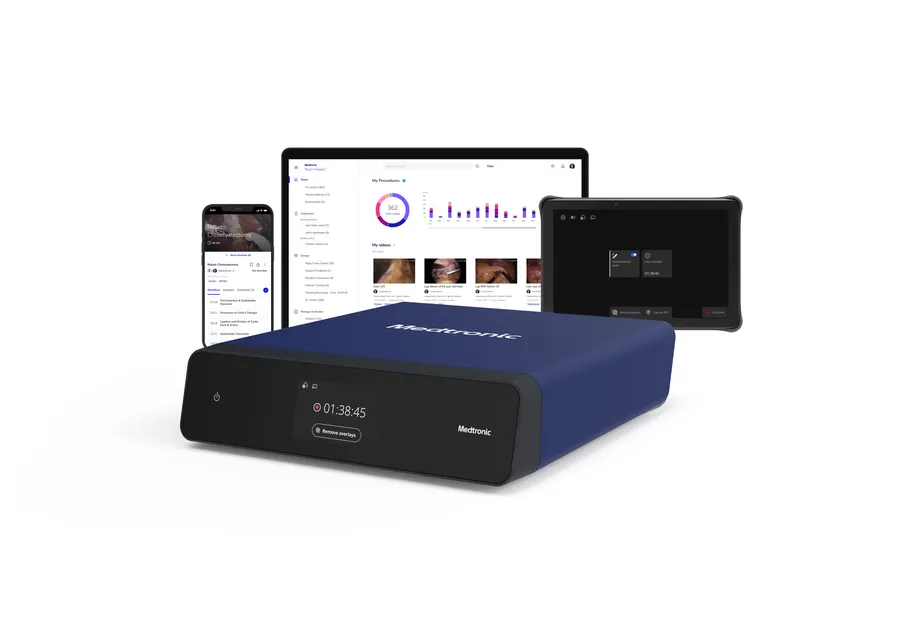
Leading architecture and delivery of a regulated AI-video platform on embedded GPUs, enabling multiple AI applications to share a single GPU while meeting strict medical isolation and latency requirements.

Impact

  • Defined and owned the software architecture for a regulated AI-video platform, enabling multiple AI applications to share a single GPU with strict medical/non-medical isolation and sub-frame overlay latency for real-time surgical guidance.
  • Built a C++ stack (AI manager, scheduler, TensorRT inference, video/AI recording) with reusable libraries for message-passing middleware, visualization, logging, telemetry and monitoring.
  • Led cross-functional AI-video delivery across 8 teams: ML, Systems, DevOps, Cloud, Quality, Regulatory and UI.
  • Co-located architecture and documentation with code, automating variant-aware regulatory artifact generation in CI for traceable, submission-ready FDA deliverables.
  • Introduced an agentic-AI workspace adopted daily for development, documentation, compliance auditing, FMEA review and regulatory preparation.
  • Mentored 5+ engineers through code pairing and technical reviews, increasing delivery pace and design quality.
Role notes â–¸

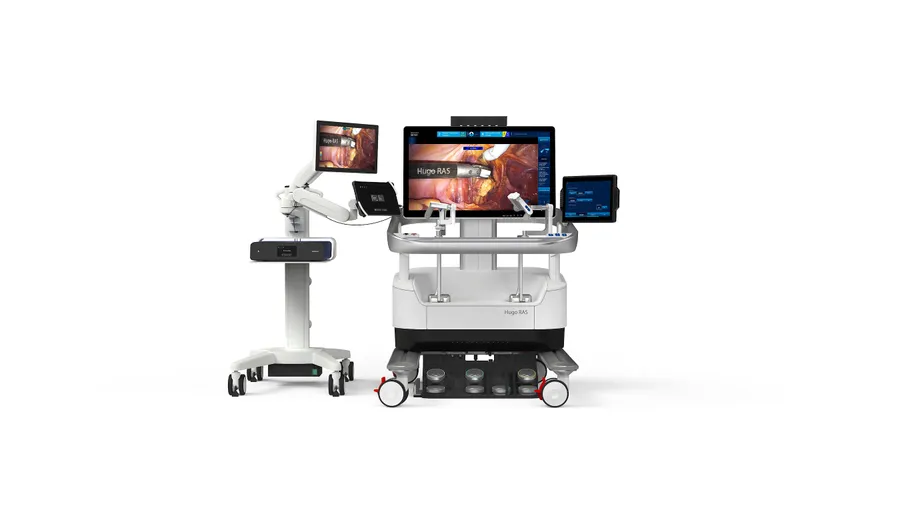
Stepped into the AI-Video Technical Lead role to own the architecture and delivery of Medtronic's regulated surgical AI-video platform, a system that delivers real-time AI guidance during robotic and laparoscopic surgery, from prototype to release.

The platform is built around three goals: isolation (multiple AI applications sharing a single embedded GPU without interference), segregation (clean medical/non-medical software boundaries for IEC 62304 compliance), and performance (sub-10 ms inference latency on every surgical frame). Achieving this required a modular multi-process design with one responsibility per service, a pub/sub and shared-memory IPC layer for zero-copy video transport, and an AI manager that controls inference end-to-end, preventing parallel overloads, enforcing valid AI combinations, and recovering from failure modes.

Beyond the runtime, the role spans the full delivery stack: unified dev containers for engineers and CI, a modular build system enabling feature-gated releases across product variants, shared platform libraries, hardware-in-the-loop integration testing, and documentation practices that feed directly into FDA submission artefacts. As technical anchor across ML, Systems, Quality, Regulatory, and UI teams, this role owns technical decisions from architecture through regulatory sign-off.

platform-architecture technical-leadership cpp tensorrt cuda gpu-scheduling fda-submissions

Principal Software Engineer

Medtronic, Digital Surgery

Jun 2023 - Jan 2025 London, UK

Built the AI inference pipeline delivering real-time surgical guidance on embedded GPUs in the operating room.

Impact

  • Achieved sub-10 ms inference on Jetson Orin with >99% accuracy using model compression and quantization-aware training.
  • Built an automated AI model conversion and verification pipeline converting PyTorch models to TensorRT, validating on- and off-target datasets spanning thousands of hours of annotated video.
  • Containerized the dev and CI toolchain across x86/ARM targets, guaranteeing reproducible builds and test environments.
  • Designed modular build system enabling feature-gated releases across product variants from shared code.
Role notes â–¸

Joined Medtronic Digital Surgery as Principal Software Engineer to turn research models into regulated product software.

Built the inference pipeline and tooling that brought real-time PyTorch/ONNX surgical AI onto embedded GPUs, established on-target validation and benchmarking for model verification, and led monorepo and build/CI improvements that laid the groundwork for the later AI-video platform.

cpp python model-optimization pytorch onnx tensorrt model-verification nvidia-jetson ci-cd

Senior Robotics Software Engineer

Arrival, Mobile Robotics

Mar 2021 - Jun 2023 London, UK

Led the vision system for a 100+ autonomous mobile robot fleet running Arrival's microfactories.

Impact

  • Owned the hardware and software vision system for the 100+ robot WeMo fleet at Arrival's Bicester microfactory.
  • Designed Relative Move To: visual servoing with fiducial markers achieving sub-5 mm, sub-0.3° position accuracy.
  • Reduced cross-robot pose-transfer error ~8x (translation) and >15x (orientation) via a teaching-by-showing calibration workflow.
  • Built automated single-shot intrinsic/extrinsic calibration and end-of-line validation pipelines for fleet commissioning.
Role notes â–¸

Promoted into a senior role to lead the vision system for Arrival's WeMo fleet in the microfactories. I owned vision-based docking, automated calibration, and end-of-line validation tooling used to commission robots at scale and keep positioning performance reliable across hardware variation and factory deployments.

Show, Don't Tell

Project

WeMo vision calibration

Arrival · 2022 - 2023

London, UK

A production calibration and validation workflow for the WeMo robot fleet, covering camera assembly and configuration, single-shot intrinsic calibration, extrinsic calibration and end-of-line accuracy checks needed for reliable vision-based positioning.

Expand project

4 highlights

Tags

C++ ROS Computer Vision computer-vision calibration fleet-management factory-automation

Highlights

  • Designed the camera assembly, configuration and calibration workflow used during WeMo production and commissioning.
  • Built automated intrinsic and extrinsic calibration pipelines plus tooling to manage per-robot calibration artefacts.
  • Defined validation procedures for relative positioning, targeting better than 5 mm positional error and 0.5 degree angular error.
  • Reduced manual calibration effort and improved repeatability across fleet deployments.

Project

Relative Move To (RMT)

Arrival · 2021 - 2023

London, UK

A vision-based short-range positioning system for WeMo autonomous mobile robots, used after coarse navigation to align precisely with charging stations, assembly cells and other factory interfaces. Combined onboard cameras, fiducial markers and closed-loop visual servoing to achieve repeatable docking accuracy. Extended the same approach to multi-robot cluster formations, allowing poses taught on one robot to be reused across other robots after calibration.

Expand project

6 highlights

Tags

C++ ROS Computer Vision autonomous-navigation visual-servoing fiducial-markers factory-automation

Highlights

  • Designed the Relative Move To capability for short-range autonomous docking and alignment using onboard cameras and fiducial targets.
  • Used a teaching-by-showing approach so desired poses could be learned once and reused across the fleet instead of reteaching every target on every robot.
  • Defined the goal model and factory integration flow for station- and payload-specific positioning targets, including cluster-mode pallet delivery.
  • Calibration cut cross-robot pose-transfer error by roughly 8x in translation and more than 15x in orientation, despite lens and sensor variability, camera mounting differences and manufacturing tolerances.
  • Validated the method with motion-capture-based accuracy campaigns, including multi-robot cluster tests where poses learned on one robot still achieved about 1.8 to 2.8 mm translation accuracy and about 0.04 to 0.1 degree angular accuracy.
  • Enabled reliable coupling to charging stations and factory interfaces after coarse navigation.
vision-systems camera-calibration commissioning-tooling cpp robot-fleet precision-positioning

Robotics Engineer, Autonomous Navigation

Arrival, Mobile Robotics

Sep 2019 - Mar 2021 London, UK

Developed navigation algorithms and simulation tooling for Arrival's autonomous mobile robot fleet.

Impact

  • Integrated lidar-based navigation stack for the WeMo AMR fleet, and state reporting to the factory orchestrator.
  • Implemented a visual servoing algorithm for automatic docking to charge and factory stations.
  • Built the fleet simulation environment used to validate navigation and docking behavior before hardware deployment.
Role notes â–¸

First role at Arrival, on the Autonomous Navigation team, building navigation and simulation software for the autonomous mobile robots (AMRs) in Arrival's microfactories. Worked on multi-robot ROS architecture, robot abilities for movement and docking, and the test infrastructure used to validate the fleet before promotion into the senior vision role after 18 months.

Show, Don't Tell

autonomous-navigation kubernetes ros cpp dds integration-testing gazebo unreal-engine

Autonomous Driving Engineer

Italdesign Giugiaro (Volkswagen Group)

Sep 2017 - Sep 2019 Turin, Italy

ML and computer vision technical lead across autonomous driving, urban mobility and flying-car projects.

Impact

  • Pop.Up (with Audi & Airbus): built drone localization, and autonomous latching. Demo at Amsterdam Drone Week 2018.
  • Autonomous Driving: built sensor stack, perception, mapping, planning, control, logging/replay, and SIL/HIL testing.
  • InTo: led ML/CV dev for passenger-flow prediction using onboard and station cameras; deployed at a Turin metro station.
  • Wheem-i: built obstacle/free-space perception and shared-control driver assistance for a semi-autonomous mobility device; finalist in Toyota's $4M Mobility Unlimited Challenge.
  • Roborace: trained and deployed CNNs for object detection and semantic segmentation on autonomous racing car.
Role notes â–¸

Joined Italdesign's new Autonomous Driving team as robotics expert. Technical lead for machine-learning and computer-vision work across InTo, Pop.Up Next, Wheem-i and Roborace, and responsible for the sensor set and full autonomous-driving stack (perception, mapping, localisation, planning, control) on the Italdesign prototype vehicle. Built the software infrastructure from scratch, selected the sensor and compute platform, and set up SIL/HIL validation to deliver the first autonomous shuttle and flying-car demonstrations.

Show, Don't Tell

Project

Roborace

Italdesign · 2019

Turin, Italy

A joint research programme between Italdesign, Volkswagen Group's Data:Lab Munich innovation centre and Roborace to develop and validate machine-learning algorithms for high-performance autonomous driving. We used Roborace's DevBot 2.0, an all-electric race car that can be driven by either a human or an AI stack, as a testbed to push perception and decision-making to the limits of vehicle dynamics under Roborace's "Research to Road" philosophy.

Expand project

3 highlights · 2 more videos

Tags

Python C++ Deep Learning ROS autonomous-driving deep-learning perception obstacle-avoidance racing

Highlights

  • Trained and deployed convolutional neural networks for object detection and semantic segmentation on the Roborace testbed.
  • Contributed to the perception and obstacle-avoidance stack validated on track with the DevBot 2.0 autonomous race car.
  • Worked alongside Data:Lab Munich data scientists on machine-learning algorithms optimised for high-speed, dynamic racing conditions.

More Videos

The Final Obstacle Avoidance Test: Behind Data:Lab Episode 03

Italdesign: Icons of Automotive Design: Data:Lab Partners

Project

InTo

Italdesign · 2018 - 2019

Turin, Italy

A service that improves travel on the metro by analysing on-board and station camera feeds to predict coach crowding and passenger flow. The system estimated train presence, coach occupancy and alighting flow in real time, then guided passengers on the platform towards less crowded carriages with green, yellow and orange visual signals.

Expand project

5 highlights · 2 more videos

Tags

Python Deep Learning Computer Vision machine-learning computer-vision smart-city

Highlights

  • Led the ML and computer-vision work for a real-time passenger-information system combining onboard and station cameras.
  • Used CNN classification for train presence, coach occupancy estimation and alighting-flow estimation.
  • Used detection and tracking for door open/close events, people detection and people counting.
  • Built a random-forest model to predict how many passengers would exit each train.
  • Deployed successfully at the Re Umberto station in Turin from May 2019.

More Videos

InTO - The lighted subway

InTO - Press Conference

Project

Wheem-i

Italdesign · 2018 - 2019

Turin, Italy

"Wheel-on" semi-autonomous electric devices located in urban hubs to assist wheelchair users. Finalist of the $4M Mobility Unlimited Challenge from the Toyota Mobility Foundation.

Expand project

2 highlights · 2 more videos

Tags

C++ ROS Computer Vision mobility perception shared-control autonomous-navigation

Highlights

  • Perception system for obstacle and free-navigable-space detection.
  • Human-machine shared control with driver-assistance for obstacle avoidance.

More Videos

Italdesign Moby project: a sharing service for wheelchairs users

Mobility Unlimited Challenge Launch Film (60s)

Project

Pop.Up Next

Italdesign · 2017 - 2019

Turin, Italy

An electric, modular and autonomous concept that couples a ground module, a cabin and an aerial drone module. Starting from a blank sheet and a six-month deadline, I defined the ground-module sensor and compute stack, built the full autonomous-driving software on top of ROS/Autoware, and set up simulation-driven validation before hardware was ready. The same prototype vehicle, equipped with cameras, lidars, radars, GNSS, IMU and ultrasonics, was used for the autonomous shuttle demonstration and the drone-alignment demo at Amsterdam Drone Week 2018.

Expand project

8 highlights · 3 more videos · 1 photo

Tags

C++ ROS Computer Vision Deep Learning autonomous-driving drones perception slam planning visual-servoing

Highlights

  • Defined the hardware and software architecture for the autonomous ground module, including cameras, lidars, radars, ultrasonics, GNSS/IMU, NVIDIA PX2 and MicroAutoBox.
  • Perception work spanning 2D and 3D obstacle detection, semantic segmentation, and pedestrian, traffic-sign, and vehicle detection.
  • Mapping and localisation with camera, Lidar, IMU, odometry and GNSS+RTK.
  • Planning and decision making, with PID and Model Predictive Control for actuation.
  • Introduced SIL with CARLA and HIL with dSPACE SCALEXIO/IPG CarMaker to validate perception, localisation, planning and control before vehicle integration.
  • Delivered the first autonomous shuttle demo with lidar mapping, offline path generation, obstacle detection, emergency braking and mobile-app destination selection.
  • Vision-based drone detection and pose estimation from the car module, and autonomous navigation for centring and latching with the drone module, shown at Amsterdam Drone Week 2018.
  • Helped turn Italdesign's first software and robotics project into follow-on work and patents.

More Videos

1:4 scale flying demonstration

Pop.Up Next 2018

Italdesign Official Press Conference at the 2018 Geneva International Motor Show

Gallery

autonomous-driving-stack ros cpp ml deep-learning sensor-integration sil-hil perception

R&D Robotics Engineer

INRIA, Lagadic Team

Nov 2013 - Aug 2017 Rennes, France

Four years of perception and visual-servoing research across humanoid, mobile, industrial and aerial robots.

Impact

  • Four years of perception, navigation and visual-servoing research across drones, mobile, industrial and humanoid robots.
  • Built a ROS + MATLAB/Simulink + V-REP framework to validate algorithms in simulation and deploy identical code to real robots.
  • Implemented visual servoing on Romeo and Pepper for grasping, dual-arm manipulation, and obstacle-aware people following.
  • Researched object detection, model-based and template tracking, 3D point-cloud segmentation, augmented reality, face and text recognition, and audio localization.
  • Supervised research interns end-to-end on perception and control projects.
Role notes â–¸

Joined the Lagadic team at INRIA Rennes, one of the leading groups in visual servoing research, as an R&D engineer under François Chaumette. Worked across the full perception-to-control stack for humanoid, mobile, industrial and aerial robots over four years.

Developed perception and visual-servoing capabilities for the Romeo and Pepper humanoid robots, covering single- and dual-arm grasping, door opening, whole-body control, people following and obstacle avoidance. As part of the Comanoid project with Airbus, integrated visual-servoing tasks into a QP-based whole-body controller enforcing balance, posture and joint-limit constraints, leading to a RA-L / ICRA 2017 publication. Built a ROS + MATLAB/Simulink + V-REP rapid-prototyping framework adopted across the team for validating algorithms in simulation before deploying the same controllers to real robots.

Co-authored papers at RA-L / ICRA 2017 and Humanoids 2016, supervised research interns, and open-sourced VispNaoqi and RomeoTk, libraries that bridged ViSP with the NaoQi SDK and packaged the Romeo research toolkit for the community.

Show, Don't Tell

Project

Vision-based navigation with Pepper

INRIA · 2015 - 2017

Rennes, France

Vision-based navigation demonstrations with the Pepper humanoid robot (Softbank Robotics), combining image-based visual servoing, people following and obstacle avoidance with onboard 2D and RGB-D cameras.

Expand project

4 highlights · 2 more videos

Tags

C++ Python ROS ViSP humanoid-robots visual-servoing navigation obstacle-avoidance

Highlights

  • Developed image-based visual servoing for Pepper using ROS and OpenTLD to track and follow generic targets in real time.
  • Built a people-following behaviour driving Pepper's base from onboard vision.
  • Combined visual servoing with obstacle avoidance for safe indoor navigation among people.
  • Delivered a box-grasping demonstration on Pepper built on top of the same perception and visual-servoing stack.

More Videos

Pepper Image-Based Visual Servoing using ROS OpenTLD

The robot Pepper follows a person using vision

Project

Whole-body visual servoing on Romeo

INRIA · 2015 - 2017

Rennes, France

Whole-body control of the Romeo humanoid robot formulated as a quadratic programming problem, with visual servoing tasks (grasping and gaze) integrated alongside balance, posture and joint-limit constraints. Part of the Comanoid project with Airbus.

Expand project

3 highlights · 1 more video

Tags

C++ ROS ViSP humanoid-robots visual-servoing whole-body-control optimization

Highlights

  • Integrated image-based visual servoing tasks into a QP-based whole-body controller that simultaneously enforced balance, posture and joint-limit constraints.
  • Demonstrated whole-body grasping and gaze control on the Romeo humanoid robot, coordinating arm, torso and leg motion from a single visual task.
  • Co-authored "Visual Servoing in an Optimization Framework for the Whole-Body Control of Humanoid Robots" published at IEEE RA-L 2017 and presented at ICRA 2017.

More Videos

Whole-body control with Romeo: Gaze by visual servoing

Project

ROS, MATLAB/Simulink & V-REP Prototyping Framework

INRIA · 2014 - 2015

Rennes, France

A rapid-prototyping framework based on ROS, MATLAB/Simulink and V-REP for developing and validating robot control algorithms. It allowed the team to test MATLAB/Simulink and C++ controllers first in simulation and then transfer them onto real robotic platforms with the same communication and control workflow.

Expand project

3 highlights · 2 more videos

Tags

ROS MATLAB Simulink C++ V-REP robotics simulation controls prototyping

Highlights

  • Built a shared framework connecting ROS, MATLAB/Simulink and V-REP for fast prototyping of sensor-based robot control algorithms.
  • Enabled the same MATLAB/Simulink and C++ control algorithms to be exercised in simulation first and then deployed onto real robots.
  • Used across platforms including Romeo, Pioneer P3-DX, Adept Viper s650 and MikroKopter.

More Videos

V-REP ROS Bridge demonstration

MATLAB ROS Bridge demonstration

Project

Vision-based manipulation with Romeo

INRIA · 2013 - 2017

Rennes, France

Perception and manipulation demonstrations on the Romeo humanoid robot (Softbank Robotics) combining object detection, model-based and template tracking, 3D point-cloud segmentation and visual servoing to grasp objects, open doors and interact with people.

Expand project

6 highlights · 4 more videos · 1 photo

Tags

C++ Python ROS ViSP humanoid-robots visual-servoing manipulation perception

Highlights

  • Implemented object localisation and single-arm grasping by visual servoing using 2D and RGB-D cameras.
  • Extended the approach to coordinated dual-arm manipulation, including a ball-in-maze solving demonstration.
  • Developed a door-handle detection and opening task using an RGB-D camera.
  • Built a face detection, recognition and face-servoing pipeline for human-robot interaction.
  • Combined object detection, model-based tracking, template tracking, 3D point-cloud segmentation, augmented reality and text detection in natural images across demonstrations.
  • Authored "Vision-based Manipulation with the Humanoid Robot Romeo" presented at IEEE Humanoids 2016.

More Videos

Whole-body control with Romeo: Grasping by visual servoing

Romeo dual arm manipulation: ball-in-maze game

Romeo face servoing

A door opening task using a RGB-D camera with the humanoid robot Romeo

Gallery

visual-servoing research-engineering ros cpp matlab-simulink simulation humanoid-robots

Robotics Engineer Intern

IRCCyN (now LS2N)

Feb 2013 - Sep 2013 Nantes, France

Master's thesis intern, 2 kHz vision-based pose estimation for a high-speed parallel robot.

Impact

  • Developed a C++ algorithm for pose and velocity estimation of a high-speed parallel robot using vision.
  • Designed a visual system with high-performance CoaXPress cameras (acquisition frame rate of 2 kHz).
Role notes â–¸

Master's thesis internship on vision-based pose and velocity estimation for a high-speed parallel robot, as part of the French ANR project ARROW. The goal was to design accurate and fast robots with large operational workspaces, using a vision system to close the control loop at 1-2 kHz.

pose-estimation high-speed-robotics cpp machine-vision coaxpress
Show earlier roles (1) â–¸

IT Assistant

Spack Srl

Jul 2008 - Sep 2008 Genoa, Italy

Summer IT consulting: software installation and hardware setup across Banca Carige branches.

Impact

  • In charge of software installation on Banca Carige's workstations.
  • Set up and tested new hardware in the bank's branch offices.
Role notes â–¸

Short summer IT consulting role, installing software on Banca Carige workstations and testing new hardware in branch offices.

it-support software-installation hardware-setup